
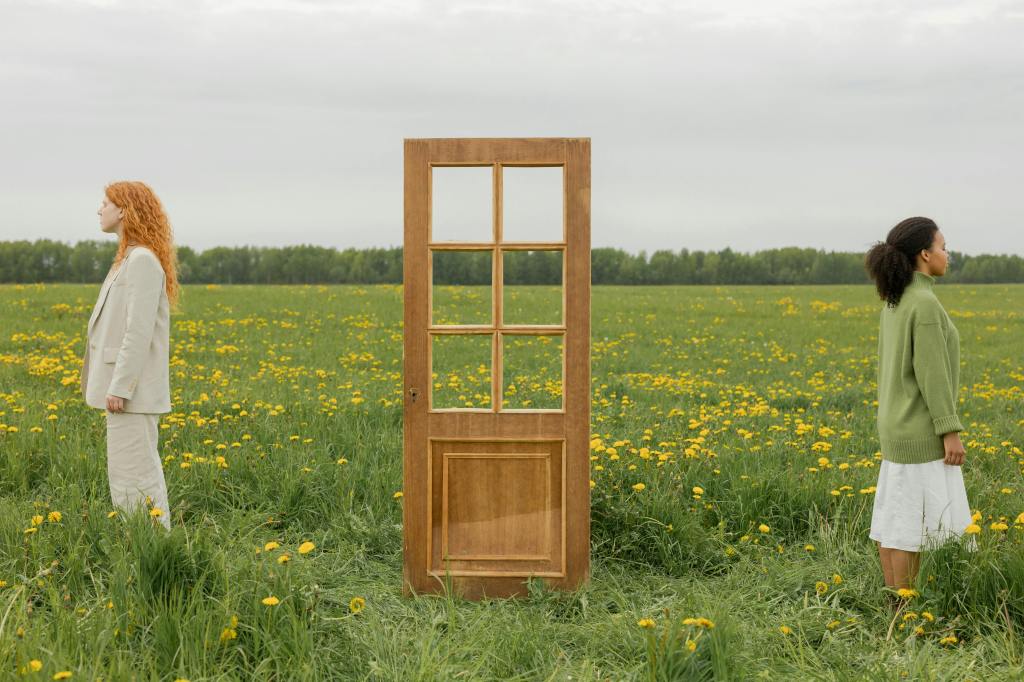
How do we enforce them? — Should we even enforce them?
“Do you feel you have clear personal boundaries? If so, how do you enforce them, or how do you wish you enforced them more?” This is the question I asked my team for our icebreaker before our meeting. It’s not your typical icebreaker, but I am known for unintentionally going deep, and sometimes they refer to my icebreakers as mini therapy sessions. And let’s be real, sometimes we all could use them!
Personally, I just love authentic connection and in my journey to being myself more and creating space for more authentic connections, I can’t help but to bring these experiences and conversations to the spaces that I exist in. While I brought it up in a meeting, the question first came to me as a personal reflection, one that I’m currently grappling with. It wasn’t until earlier this year that I realized that I could do a better job with enforcing my personal boundaries. At times, I wouldn’t even know I have a personal boundary until I feel like someone is pushing them. And in the moment I don’t always register it as “My boundary is being pushed!” Sometimes it just feels like anger, discomfort, or resentment towards someone who does something that made me uncomfortable, whether I said something about it or not. And that last part is the hardest part that I am learning – saying something about my boundaries and sticking to it.
Personally, I think there are times when I have a clear boundary and I am vocal about enforcing it. When I reflect on it, I can even bring up tangible examples that makes me proud. However, there are other times where… I could do a better job at speaking up.
So, while I don’t have the most experience with this topic and don’t find myself an expert on it – I’m really writing to share that I am in solidarity with any woman who is working on setting her personal boundaries and sticking to it. I don’t know if there is a formula for doing this and getting it right, but I will share what I am planning to do below.
1 – Get clear on my personal boundaries: This may come from prior experience, brainstorming, or it may even happen in hindsight. Nonetheless, I am going to be very intentional about what I will accept and not accept. And I will also be okay if these things shift as I grow older and change. We are constantly evolving and that’s okay.
2 – Speak up: This is the hard part, in my opinion. Specifically, speaking up in the moment when a behavior goes against my boundary. Sometimes, speaking up in the moment doesn’t happen out of fear of being disliked, fear of how it may be received, or fear of how the interaction may go. Nonetheless, I will take a deep breath and do my best to speak up in the moment. If for some reason it becomes extremely uncomfortable to say something – I will remove myself from the situation and speak up on the issue at a later time. Whether that’s following up with a phone call, email, or text message. But the later time won’t be days or weeks after the event – I prefer a few hours or even minutes later. And again, speaking up after the fact is a last resort, my first preference is to speak up in the moment.
3 – Process with community: This is new for me, honestly. And perhaps optionally, depending on the event. Usually, I like to process in my journal. But as I’m getting older and expericing way more that life has to offer, I am learning to process with others. Now this one can be tricky, because I’m not processing to hear how other people would deal with the situation – I’m just processing to share my insights and kind of unload some of this weight and feel heard by people who will listen to me, affirm me, and pour into me if needed. Community is so important and a huge piece to supporting us with thriving.
4 – Remember, I can’t control everything that happens to me but I can control my response: This is my dad’s favorite quote, and one of the biggest lessons he’s instilled in me since I can remember (He was probably whispering this to my mother’s belly while she was pregnant with me). Regardless, this is probably the most important piece of the work. It kind of connects with number 2 above, since speaking out focuses mainly on my response. Nonetheless, if one of my boundaries is pushed I’m going to be intentional about not blaming someone for making me feel uncomfortable, or for their behavior – instead I am going to shift the focus inward as to how I can respond to the satiation to protect my peace and wellbeing. And most importantly, I have to be okay with the repercussions – if protecting my peace means loosing a fried or two, I have to be okay with that. Two things can be hard – the unsettling feeling you get in your stomach after allowing someone to push your boundary and not say anything, and also the feeling of loosing someone after you’ve told them they done something that made you uncomfortable and they decide no longer to talk to you — choose your hard.
Again, sorry I don’t have a recipe for establishing and enforcing boundaries but I can attest that this is a journey that will be everlasting. There is no one size fits all to approach it. The best thing I can say, and recommend, is to know your boundaries and remember that your peace comes first. Communicate your thoughts and what you need clearly and confidently. And most of all – be consistent. You got this.
Also, if you feel you’d like to start defining your boundaries, and getting clear on them you can start by journaling a response to the question that I opened this post with:
“Do you feel you have clear personal boundaries? If so, how do you enforce them, or how do you wish you enforced them more?”
You can also use this definition as a guideline: Boundary – The physical, emotional, and mental limits an individual sets to define what is acceptable and unacceptable behavior. (Taken from Google AI Overview)

 For Women With Dreams